If you have recently updated your sleeping space and find yourself staring at a 61 cm nightstand that feels like it’s looming over you, you are not alone. In my 20 years of consulting for UK homeowners, I have seen this exact scenario play out in hundreds of bedrooms. When you pair a low-profile platform bed with a taller, traditional-height bedside table, the visual friction is immediate. It isn’t just a matter of taste; it’s a matter of physics and ergonomics.
When you encounter a 58 cm platform bed mismatch or realize your 61 cm nightstand is too tall, the problem usually stems from a misunderstanding of how furniture scale interacts with mattress thickness. Let’s break down the math to fix your bedroom proportions.
The Golden Rule: The 5-10 cm Drop
Before you commit to new furniture, we need to establish the industry benchmark for comfort. Ergonomically, your nightstand should sit approximately 5 to 10 cm below the surface of your mattress. This ensures that when you are lying in bed, you don’t have to strain your shoulder to reach your water, phone, or reading glasses. If your bedside table is level with or higher than your mattress, you aren't just creating a "cluttered" look; you are forcing your arm into an unnatural "reach-up" position every time you need an item.
Even the National Institute of Standards and Technology (NIST), while focused on broader metrics, emphasizes the importance of human-factors engineering—and your bedroom is no different. Your reach zone is a functional space, not just a decorative one.
Your First Step: The Tape Measure Check
Put down the decor magazines and pick up your tape measure. You cannot eyeball this. You need to measure floor to mattress top at the head of the bed. Do not measure to the top of the headboard; measure to the exact point where your body rests.
If your platform bed sits at 45 cm from the floor, a 61 cm nightstand will be 16 cm *higher* than your mattress. That is a recipe for a visual catastrophe and a sore shoulder. As https://amumreviews.co.uk/should-bedside-tables-be-higher-than-the-bed/ noted on amumreviews.co.uk, when reviewing room layouts, the most common error is purchasing furniture based on "how it looks in the store" rather than how it relates to the specific mattress depth in your home.
Understanding Bed Heights: Platform vs. Divan vs. Pillow-Top
Not all beds are created equal. In the UK, we deal with a variety of bed styles, and each requires a different approach to nightstand pairing.
- Platform Beds: These typically have a lower profile. They are minimalist, which makes a tall 61 cm nightstand look like a towering skyscraper. Divan Beds: These usually come with built-in storage and are generally taller than platform frames. If you have a deep divan, a taller table might actually work. Pillow-Top Mattresses: These are "hidden" height boosters. You might think you have a standard bed, but a 30 cm deep pillow-top mattress can throw off your measurements significantly.
Take a look at the table below to see how standard table heights typically conflict with modern bed profiles:
Bed Type Avg. Mattress Height Ideal Nightstand Height Low-Profile Platform 40-45 cm 35-40 cm Standard Divan 55-60 cm 50-55 cm High-Profile Pillow-Top 65-70 cm 60-65 cmWhy 61 cm Nightstand Proportions Feel "Off"
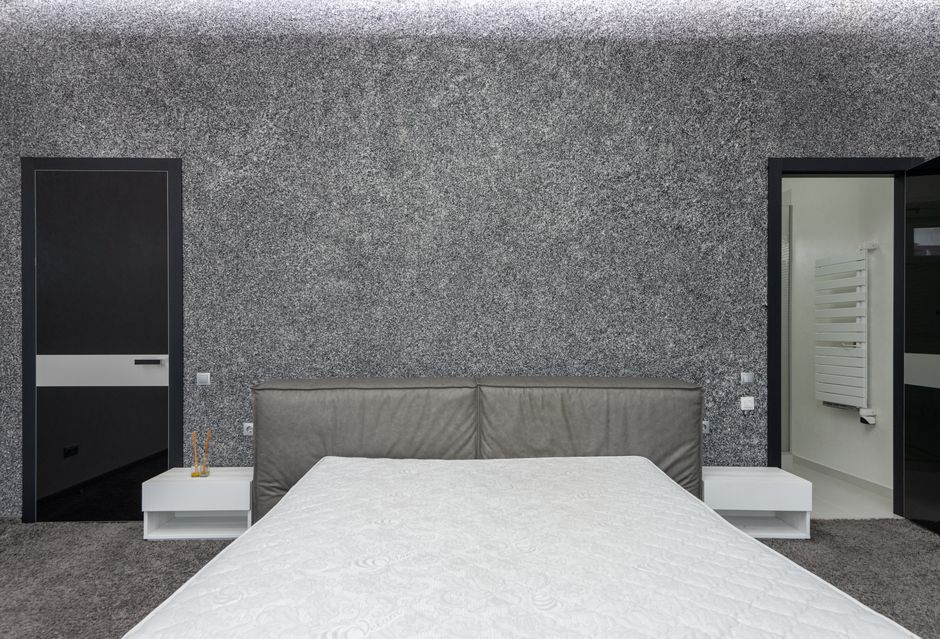
When you have a 58 cm platform bed mismatch, you are dealing with a design "heaviness." A 61 cm nightstand is designed for the American-style "high-bed" aesthetic, where the mattress sits much further off the ground. In a UK room, where space is often at a premium, this creates a feeling of confinement.
I often recommend looking at brands like Petalwood Interiors, who understand the nuance of smaller-scale furniture that fits the reality of UK box rooms. When a nightstand is too tall, it breaks the "sightline" of the bed. Your eyes want to flow across the room at the level of the mattress; a 61 cm table acts as a visual speed bump.
The Ergonomics of Bedside Reach
Think about the last time you reached for your phone in the middle of the night. If you had to lift your elbow and reach "up" onto the table surface, your nightstand is technically too high. The perfect height allows you to roll your hand sideways onto the surface with minimal effort. If your nightstand is 61 cm and your bed is 45 cm, you are constantly fighting gravity to reach your nightstand essentials.
How to Fix Your Setup Without Replacing Everything
If you already own the 61 cm nightstand and can't return it, don't panic. Here are a few professional workarounds:

Final Thoughts: Measure Twice, Buy Once
The frustration of a 61 cm nightstand next to a platform bed is a classic case of ignoring the numbers in favor of an aesthetic hope. My best advice after 20 years in this industry is simple: measure floor to mattress top at the head of the bed before you look at a single piece of furniture online or in a shop.
If you are struggling with a specific awkward alcove or a mattress that seems to grow every year, keep that tape measure in your back pocket. Nightstand proportions are not just about style; they are about the ergonomics of your sanctuary. Treat your bedroom like a workspace—one where the tools (your furniture) should be perfectly positioned for the user (you).