I’ve LVT commercial grade walked through hundreds of snagging lists in London over the last twelve years. I’ve watched multi-million-pound fit-outs crumble within three months because an interior designer prioritised an "Instagram-ready" aesthetic over the brutal reality of a busy Saturday night service. One of the most frequent offenders in this category is polished concrete. It looks fantastic in an architect’s rendering, but put it in a packed bistro with a high ceiling, and you’ve got an acoustic disaster on your hands.
So, is polished concrete too noisy? Let’s strip back the hype and look at the engineering.

The Acoustic Reality of the "Hard Underfoot Floor"
When you walk into a venue with polished concrete floors, you aren't just hearing the music; you’re hearing the clatter of every dropped fork, the screech of chair legs, and the overlapping roar of a hundred conversations bouncing off the ceiling. Polished concrete is a hard underfoot floor that possesses zero sound-absorption qualities. It is a reflective surface that acts like an acoustic mirror.
If you are hell-bent on the concrete look, you must budget for acoustic treatment. I’m not talking about sticking a few foam panels in the corner. I’m talking about ceiling baffles, wall-mounted acoustic panels, or heavy-duty soft furnishings. If you don't calculate your NRC (Noise Reduction Coefficient) ratings, you’re going to end up with a dining room where your customers have to shout at their dates just to be heard. And believe me, when the noise floor gets that high, your customers don’t stay for a second bottle of wine. They finish, they leave, and they don't come back.
Commercial vs. Domestic: Don't Get Fooled
The biggest mistake I see? Using residential-grade sealers in a commercial kitchen or high-traffic dining area. Contractors will try to tell you it’s "easy clean." I’ve heard that line for over a decade. If a product is meant for a house where two people live, it will disintegrate under the footfall of three hundred hungry diners and a mop bucket full of commercial-grade degreaser.. (sorry, got distracted)
Commercial-grade flooring requires a robust, chemically resistant resin or high-build sealer. Companies like Evo Resin Flooring understand this distinction. They know that when you’re specifying for a professional environment, you aren't just looking at the surface finish; you’re looking at the substrate preparation and the edge details. If the junction between your concrete and your skirting board or bar front isn't perfectly sealed, water—and the bacteria that comes with it—will find a way in.
Slip Resistance and Wet-Zone Planning
This is where I see the most under-specced transition zones. You cannot have the same floor specification for the front-of-house dining area as you do for the area behind the bar or near the kitchen pass.
When specifying flooring, we look to DIN 51130, the German standard for slip resistance in commercial environments. For dining areas, you might get away with an R9 or R10 rating, but behind the bar, or anywhere near a drink station? That’s an R11 or R12 territory. If you ignore this and try to use a sleek, polished finish throughout, you are just waiting commercial kitchen floor cleaning guide for a lawsuit when a bartender slips on a spilled pint.
Recommended Slip Resistance Targets
Area Recommended DIN 51130 Rating Dining Room R10 Bar Service Area R11 Kitchen Prep/Wash-up R12+ Entrance/Vestibule R11Hygiene, HACCP, and the Grout Trap
The Food Standards Agency (FSA) is very clear about the need for non-porous surfaces in food service environments. While polished concrete is often billed as "sealed," the reality is that many budget-friendly systems are essentially decorative paints that will chip, scratch, and eventually harbor bacteria in the micro-cracks.
One thing that really gets under my skin? People who think they can get away with tiled floors in a bar or kitchen because they look "professional." Have you ever tried to scrub heavy grease out of a grout line at 2:00 AM? Grout is the enemy of HACCP (Hazard Analysis and Critical Control Point) compliance. If you want a hygienic floor, you need a seamless resin system with coved skirting. No grout, no joins, no hidden nasties. If you use a material that has pores, you’re just creating a playground for pathogens.
The "Saturday Night" Stress Test
I always ask the same question during a site visit: "What happens behind the bar on a Saturday night?"
Think about it. You’ve got ice being dumped, beer being spilled, heavy glass racks sliding across the floor, and staff moving at breakneck speed. If your floor isn't up to the task, that "opening-week material"—the one that looked so beautiful in the photos—will look like a disaster zone within three months. I have seen polished concrete start to "dust" under heavy traffic, creating a fine silt that tracked into the dining room, scratching the floor further and creating a slip hazard.
If you are operating a high-turnover venue—a busy barbershop, a craft beer bar, or a high-end restaurant—you need sealed concrete maintenance plans. This isn't a "fit and forget" flooring choice. It requires periodic re-sealing, specialist cleaning agents, and a commitment to protecting the surface from heavy point-loading (like fixed heavy furniture or equipment feet).
Sector-Specific Needs
- Restaurants: Focus on acoustic dampening. If you go with concrete, increase your soft furnishings significantly to prevent the "canteen echo." Bars: Prioritise slip resistance (R11+) and seamless, coved transitions. If you have a bar that gets wet, do not install a brittle decorative concrete that will crack under temperature fluctuations. Barbershops: Hair is the enemy. A porous or overly textured floor will trap fine hair, making it impossible to keep clean. You need a smooth, hard-wearing, non-porous resin seal that allows hair to be swept up without sticking.
The Verdict: Is it worth it?
Polished concrete is not "too noisy" if—and only if—you engineer the space around it. You cannot treat a commercial restaurant like a living room. You cannot ignore the DIN 51130 slip ratings, and you absolutely cannot treat a bar area with the same flooring as a quiet corner booth.
If you want the industrial look, go for it. But don't skimp on the installation. Use a professional-grade resin system, ensure your transitions are watertight, and for heaven’s sake, spend the money on acoustic baffles. If you don't, you'll be calling me for a floor replacement long before your first-year accounts are due.
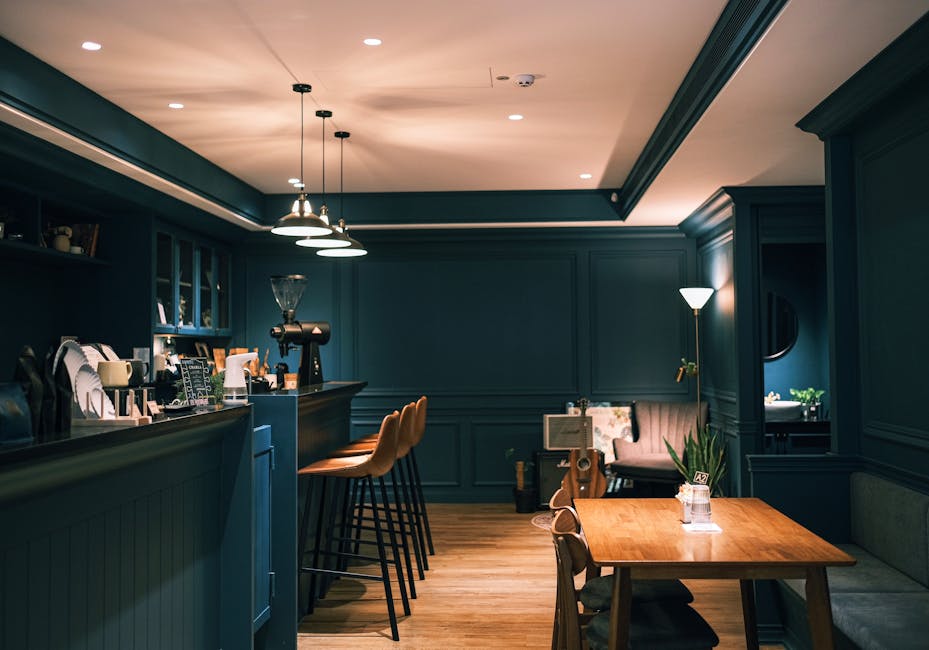
Always remember: the best flooring is the one you don't have to think about because it’s doing its job perfectly, silently, and safely, while the rest of the venue handles the chaos of a busy weekend.